Mastering Dimensional Holiday Art: A Guide to Layered Christmas Decor 3D Craft
The evolution of holiday aesthetics has moved significantly beyond flat ornaments and static tree skirts. In recent years, there has been a resurgence in tactile, dimensional artistry that brings depth and shadow play into festive environments. At the forefront of this movement is the concept of Layered Christmas Decor 3D Craft, a technique that transforms two-dimensional designs into voluminous masterpieces. This approach allows creators, from professional interior designers to weekend hobbyists, to construct intricate scenes and floral arrangements that appear to float in space. By stacking precisely cut layers of material, one can achieve a level of visual richness that traditional printing or painting simply cannot replicate.
The appeal of this craft lies in its versatility and the interplay of light and shadow. When light hits a multi-layered structure, it casts micro-shadows between the tiers, creating a sense of realism and depth. Whether constructing a complex winter landscape or a vibrant floral arrangement, the methodology remains consistent yet infinitely adaptable. The process invites a deep engagement with materials, requiring an understanding of how different textures and densities interact when assembled. This guide explores the practical applications, material considerations, and technical workflows necessary to master this engaging form of holiday expression.
The Mechanics of Volumetric Design
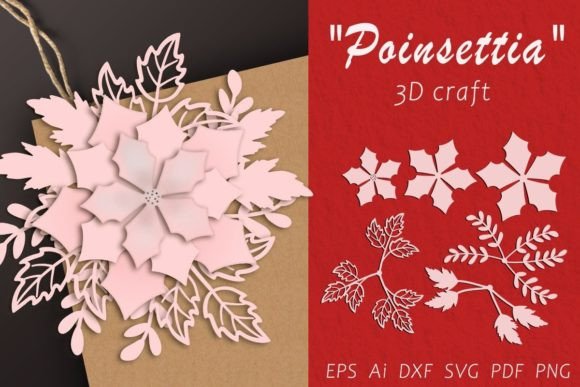
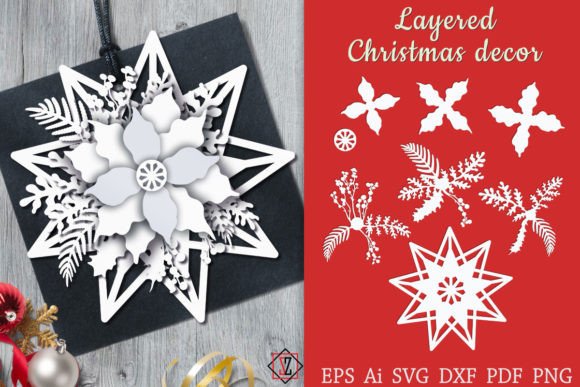
Understanding the mechanics behind Layered Christmas Decor 3D Craft is essential for achieving professional results. The core principle involves deconstructing a single image or concept into multiple planes. Each plane represents a specific depth level of the final object. For instance, in a design featuring a poinsettia flower surrounded by snowflakes, the background foliage might be the bottom layer, the petals the middle layer, and the stamen or foreground snowflakes the top layer.
When these layers are cut out and assembled by fastening them together at a central point or via strategic spacers, the result is a bouquet or scene that possesses genuine volume. This is not merely an optical illusion created by shading; it is physical depth. The distance between layers can be adjusted to alter the intensity of the shadows and the perceived scale of the object. A wider gap between layers creates a more dramatic, theatrical effect, while tighter spacing offers a subtler, more refined texture. This control over dimensionality allows the creator to tailor the piece to its specific environment, ensuring it complements rather than overwhelms the surrounding decor.
Selecting the Right Materials for Structural Integrity
The success of any 3D layered project hinges on the choice of material. As noted by experienced crafters, in order for the layers to cut better and keep their shape, it is imperative to cut from a denser material. While paper is the most accessible medium, not all paper is created equal. Standard printer paper often lacks the rigidity required to hold a shape without bowing or curling over time, especially in varying humidity conditions common during the winter holidays.
For optimal results, consider using cardstock with a weight of 80lb cover or higher. This provides enough stiffness to maintain the architectural integrity of the layers while still being pliable enough for intricate cutting. For outdoor displays or high-traffic areas, synthetic materials like vinyl or thin acrylic sheets can be employed. These materials offer superior durability and weather resistance. The texture of the material also plays a crucial role; a matte finish absorbs light softly, enhancing the shadow effects, whereas a glossy finish can create unwanted reflections that distract from the dimensional details. Experimenting with mixed media—combining textured cardstock with metallic foils or translucent vellum—can add further complexity and visual interest to the final piece.
Digital Workflows and File Compatibility
In the modern era of crafting, the bridge between digital design and physical creation is seamless, provided one understands the file formats involved. A wide choice of file formats will allow you to cut layers on a convenient machine or manually, catering to both high-tech fabrication labs and traditional hand-cutting enthusiasts. The ecosystem of Layered Christmas Decor 3D Craft relies heavily on vector and high-resolution raster files to ensure precision.
Professionals and advanced hobbyists often utilize machines such as laser cutters, CNC routers, or electronic die-cutting plotters. These devices require vector-based files that define paths rather than pixels. Formats such as EPS10, SVG, AI, and DXF are industry standards for this purpose. An EPS10 file, for example, ensures compatibility with older and newer versions of illustration software, providing a reliable baseline for editing. SVG files are particularly popular for web-based cutting software, offering scalability without loss of quality. DXF files are the preferred choice for CAD-based machinery, ensuring that industrial-grade equipment can interpret the design accurately.
For those who prefer manual cutting or do not have access to specialized machinery, high-resolution raster images are indispensable. Receiving separate files for each layer in PNG format with a transparent background and a resolution of 300 DPI allows for precise tracing and hand-cutting. The 300 DPI standard ensures that when printed, the edges remain crisp, preventing the "jagged" look that can ruin the illusion of depth. Having a general file that consolidates all layers alongside individual layer files provides flexibility; the general file serves as a reference map for assembly, while the individual files facilitate the actual production process.
Software and Hardware Considerations
Before embarking on a project, it is critical to ensure technical readiness. IMPORTANT: Please make sure you have the correct software to open and use the files and your hardware compatibility before purchasing or beginning work. Vector files like AI or EPS require specific graphic design software such as Adobe Illustrator, CorelDRAW, or free alternatives like Inkscape. Without these tools, manipulating the anchor points or separating layers for custom coloring becomes difficult. Similarly, hardware limitations must be considered. A desktop plotter may have a maximum cutting width that differs from a handheld cutter, influencing how large a project can be executed in a single pass.
Furthermore, color management is a vital step in the digital workflow. Since you can cut out the layers in any color and texture you want to create your own unique craft, the digital proofing stage is where these decisions are finalized. Digital files allow creators to simulate different color palettes instantly. One might test a traditional red and green scheme against a modern monochromatic silver and white theme before committing to cutting expensive materials. This digital sandbox reduces waste and encourages creative experimentation.
Creative Applications and Use Cases
The applications of Layered Christmas Decor 3D Craft extend far beyond simple table centerpieces. The adaptability of the technique makes it suitable for a broad range of scenarios, from residential decorating to commercial visual merchandising.
- Residential Wall Art: Large-scale layered silhouettes of winter forests or nativity scenes can serve as striking focal points in living rooms. When backlit with LED strips, these pieces transform into glowing installations that add warmth to cold winter nights.
- Greeting Cards and Stationery: The same principles used for large decor can be scaled down for high-end greeting cards. A layered poinsettia on a card creates a memorable tactile experience for the recipient, elevating a simple message into a keepsake.
- Retail Displays: Businesses can utilize these crafts for window displays. The depth of the layers captures the attention of passersby more effectively than flat signage, inviting customers into the store to explore the festive atmosphere.
- Educational Projects: For educators, these projects offer a hands-on way to teach geometry, spatial reasoning, and art history. Students can learn about perspective and layering while creating their own holiday decorations.
A particularly popular application is the creation of a layered Christmas bouquet with poinsettia flower and snowflake. This specific combination merges organic floral elements with geometric winter motifs. The poinsettia provides bold splashes of color and organic curves, while the snowflakes introduce sharp, crystalline lines. When assembled, the contrast between the soft petals and the rigid ice structures creates a dynamic visual tension that is highly appealing. Such a bouquet can be suspended from ceilings, mounted on walls, or placed in vases as a standalone sculpture.
Assembly Techniques and Best Practices
The assembly phase is where the magic truly happens. Cutting the layers is only half the battle; joining them correctly ensures longevity and aesthetic appeal. The goal is to fasten the layers together in the center securely without visible adhesives marring the design. Several methods exist depending on the desired permanence and the materials used.
For paper-based projects, double-sided foam tape is a favorite among crafters. It provides a consistent spacer height, ensuring uniform gaps between layers. For a more invisible join, small dots of acid-free glue applied sparingly at the central convergence point can work well, though this requires a steady hand. In more robust constructions involving wood or acrylic, small brass brads or hidden screws may be used. These fasteners can sometimes become part of the design aesthetic, adding a touch of industrial chic if left exposed, or remaining completely hidden if countersunk.
Alignment is paramount. Even a millimeter of misalignment can disrupt the symmetry of a snowflake or the natural flow of a flower petal. Using registration marks during the cutting phase can assist in aligning layers perfectly during assembly. Some digital files include these marks specifically for this purpose. Taking the time to dry-fit the layers before applying adhesive allows the creator to adjust the spacing and verify the visual impact from different angles.
Customization and Personal Expression
One of the greatest strengths of this craft is the ability to personalize. You can cut out the layers in any color and texture you want to create your own unique craft. This freedom allows the decor to match specific interior design themes, whether it be a rustic farmhouse style utilizing burlap-textured papers or a glamorous contemporary look using metallic cardstocks.
Creators are encouraged to experiment with gradient effects by using slightly different shades of the same color for successive layers. For example, a snowflake could transition from deep blue at the base to pale icy blue at the tip, mimicking the natural variation found in frozen water. Alternatively, mixing patterns—such as plaid backgrounds with solid foreground elements—can add a cozy, traditional feel. The only limit is the creator's imagination and the capabilities of their cutting tools.
The Value of Precision and Preparation
While the end result of a Layered Christmas Decor 3D Craft project is undeniably beautiful, the journey requires patience and precision. The investment in high-quality files and materials pays dividends in the final product's durability and visual impact. The availability of comprehensive file packs—including general files in EPS10, SVG, AI, DXF, PDF formats, and separate files for each layer in SVG and PNG—empowers users to approach the project with confidence. These resources eliminate the tedious task of manually separating image layers, allowing the creator to focus on the artistic aspects of material selection and assembly.
Moreover, the skills developed through this process are transferable. The understanding of vector paths, material density, and spatial assembly applies to various other fields, including packaging design, architectural modeling, and textile arts. For business owners, mastering this technique can open new revenue streams through custom commissions or the sale of finished goods. For hobbyists, it offers a fulfilling creative outlet that yields tangible, shareable results.
Ultimately, the charm of layered Christmas decor lies in its ability to capture the spirit of the season through depth and detail. It invites viewers to look closer, to appreciate the nuances of shadow and form, and to recognize the effort and creativity invested in its creation. Whether adorning a home, a classroom, or a storefront, these three-dimensional crafts bring a unique vibrancy to the holiday landscape. By leveraging the right tools, materials, and techniques, anyone can transform flat designs into stunning volumetric art that celebrates the joy and complexity of the Christmas season.
As you explore the possibilities of this craft, remember that every layer adds a story, and every shadow adds depth. The fusion of digital precision and手工 craftsmanship results in a product that is both modern and timeless. Thanks for visiting my store and exploring the potential of dimensional design. If you have any questions regarding file usage, material recommendations, or assembly techniques, please feel free to contact me, Svetlana. The world of layered decor is vast and waiting to be explored, one cut at a time.