Integrating the Mountain Lake Landscape 3D Shadow Box into Creative and Professional Workflows
In the modern professional landscape, where digital saturation is constant, the physical environment plays a critical role in cognitive performance and creative output. For entrepreneurs, marketers, educators, and freelancers, the workspace is not merely a location but a tool that influences focus, stress levels, and inspiration. Integrating tangible art pieces, such as the Mountain Lake Landscape 3D Shadow Box, offers a strategic method to enhance this environment. This is not simply about decoration; it is about curating an atmosphere that supports deep work, facilitates mental transitions, and sustains long-term productivity.
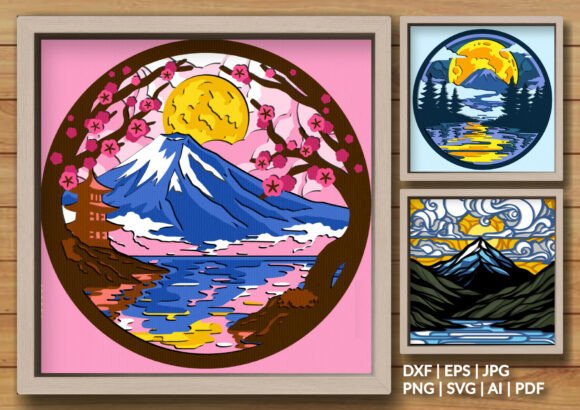
The Mountain Lake Landscape 3D Shadow Box represents a convergence of traditional papercut artistry and dimensional design. Unlike flat prints, these multi-layered artworks utilize depth to create a sense of immersion. The collection typically includes three distinct designs: the serene Spring Cherry Blossom Mt. Fuji, the dramatic Moonlit Lake Pine Forest, and the expressive Van Gogh-Inspired Starry Mountain. Each piece functions as a visual anchor, providing a focal point that can reset attention spans and reduce visual fatigue during intensive planning or execution phases.
Strategic Placement Within the Workflow
Understanding where and when to introduce these visual assets into your daily routine is essential for maximizing their impact. The utility of the Mountain Lake Landscape 3D Shadow Box extends across the beginning, middle, and end of various professional processes.
Pre-Project Preparation and Mindset Setting
Before diving into complex tasks such as drafting a marketing strategy, coding a new feature, or designing a curriculum, the brain requires a transition period to shift from "default mode" to "focus mode." Placing a shadow box within the direct line of sight during this preparation phase can serve as a grounding mechanism. The Spring Cherry Blossom Mt. Fuji design, with its balanced composition of a snow-capped peak, traditional pagoda, and blooming branches under a golden moon, evokes a sense of order and tranquility.
For professionals who rely on visualization techniques, this image acts as a primer. It signals to the brain that the environment is stable and conducive to work. By spending two minutes observing the dimensional layers before starting a timer for a work sprint, you create a psychological boundary between distraction and deep work. This ritual enhances consistency in starting tasks, a common hurdle for freelancers and small business owners managing multiple client demands.
Sustaining Focus During Execution
During the execution phase of a project, cognitive load can become overwhelming. Decision fatigue often sets in after hours of analyzing data or creating content. Here, the Moonlit Lake Pine Forest design serves a functional purpose. Its high-contrast imagery—featuring a massive yellow moon reflecting on a winding river against deep blue pine silhouettes—provides a restorative visual break without requiring the eye to leave the immediate workspace.
Research in environmental psychology suggests that views of nature, even simulated ones, can lower cortisol levels and restore directed attention. When you feel stuck on a problem or notice your efficiency dipping, shifting your gaze to the layered ridges and water reflections in the shadow box allows for a micro-restoration. This practice helps maintain quality control over your output by preventing the errors associated with prolonged, unbroken concentration. It acts as a passive reset button, allowing you to return to the task with renewed clarity.
Post-Task Decompression and Reflection
The conclusion of a workday or a major milestone often lacks a definitive closing ritual, especially for those working remotely. The Van Gogh-Inspired Starry Mountain, with its swirling clouds and radiant sun over dark green valleys, offers an artistic interpretation of movement and energy release. Using this piece as part of a shutdown routine helps signal the end of the productive cycle.
Reflecting on the day's achievements while viewing this dynamic artwork can facilitate a mental separation between professional responsibilities and personal time. This separation is crucial for preventing burnout and ensuring that you are recharged for the next day's workflow. For educators and publishers who often carry the weight of their projects home mentally, this visual cue helps establish necessary boundaries.
Integration with Digital and Physical Tools
To fully leverage the Mountain Lake Landscape 3D Shadow Box, it should be viewed as part of a broader ecosystem of tools and resources. It complements both digital platforms and physical organizational systems.
- Digital Workspaces: For those who utilize dual-monitor setups, positioning the shadow box between screens or slightly off-center creates a balanced visual field. This prevents the tunnel vision that often occurs when staring exclusively at pixels. It bridges the gap between the digital deliverables you are creating and the physical reality you inhabit.
- Lighting Systems: The dimensional nature of these papercut artworks relies heavily on lighting to cast shadows and reveal depth. Integrating the shadow box with adjustable desk lamps or ambient smart lighting can enhance its effect. Warm lighting accentuates the golden hues in the Mt. Fuji design, while cooler tones can highlight the midnight blues of the Pine Forest. Aligning your lighting schedule with your circadian rhythm while highlighting the art creates a cohesive environmental experience.
- Organization and Zoning: In shared offices or co-working spaces, these shadow boxes can define zones. Placing one in a brainstorming area versus a quiet focus nook helps communicate the intended use of the space to colleagues. The Spring Cherry Blossom might suit a collaborative zone due to its inviting warmth, while the Starry Mountain could mark a space reserved for solitary, high-concentration tasks.
Practical Implementation Tips for Long-Term Use
Successfully integrating art into a workflow requires more than just hanging it on a wall; it demands intentionality regarding maintenance, rotation, and compatibility with your evolving needs.
Rotation for Freshness: Just as software updates are necessary for optimal performance, visual environments benefit from periodic changes. While the bundle includes three distinct designs, you do not need to display all simultaneously if space is limited. Rotating the Moonlit Lake for the Starry Mountain every quarter can prevent visual habituation, where the brain stops registering the image. This keeps the stimulus effective for attention restoration.
Dust Management and Preservation: Given the multi-layered construction of these shadow boxes, dust accumulation can obscure the intricate details and diminish the 3D effect. Incorporate a gentle cleaning routine into your monthly administrative tasks. Using a soft brush or compressed air ensures the layers remain crisp. Protecting the artwork from direct, harsh sunlight is also vital to prevent fading, ensuring the colors remain vibrant for years of daily viewing.
Compatibility with Branding: For small business owners and marketers using their office as a backdrop for video calls or content creation, the aesthetic compatibility of the shadow box is key. The neutral yet striking color palettes of these mountain landscapes generally align well with professional branding. They add depth to the background without being distracting, signaling a refined and thoughtful brand identity to clients and audiences.
Enhancing Creativity and Problem Solving
Creativity often stems from the ability to make connections between disparate ideas. The abstract elements within the Mountain Lake Landscape 3D Shadow Box, particularly the rhythmic clouds in the Van Gogh-inspired piece, can stimulate lateral thinking. When facing a creative block, analyzing the interplay of light and shadow in the artwork can trigger new perspectives.
For writers and bloggers, describing the textures and emotions evoked by the layered paper can serve as a warm-up exercise. For architects and designers, studying how the artist achieved depth with limited materials can inspire innovative approaches to their own projects. The shadow box becomes a case study in efficiency and elegance, reminding creators that constraints often lead to the most beautiful solutions.
Conclusion: A Tool for Sustainable Productivity
The Mountain Lake Landscape 3D Shadow Box is more than a decorative item; it is a functional component of a well-designed workflow. By strategically placing these artworks within your workspace, you create an environment that supports mental clarity, reduces stress, and fosters creativity. Whether used to initiate a work session, sustain focus during complex tasks, or decompress after a long day, these dimensional landscapes offer a tangible connection to nature and art.
Integrating such elements into your professional routine demonstrates a commitment to holistic productivity. It acknowledges that the quality of your output is inextricably linked to the quality of your environment. As you plan your next project or reorganize your workspace, consider how the majestic peaks and tranquil waters of this collection can serve as a steady companion in your journey toward professional excellence and personal well-being.