Integrating the 3D Letters Shadow Box AMOR Design into Your Creative Workflow
In the landscape of modern digital fabrication, the transition from a conceptual idea to a tangible object relies heavily on the quality and compatibility of the source assets. For creators, small business owners, and hobbyists working with laser cutters or CNC routers, the 3D Letters Shadow Box AMOR represents more than just a decorative item; it is a modular component within a broader production pipeline. This design, typically distributed as a compressed digital download containing two DXF files and two SVG files, serves as a foundational asset for projects ranging from personalized home decor to boutique retail displays. Understanding how to effectively integrate these files into your existing workflow is essential for maximizing efficiency, ensuring material consistency, and delivering high-quality outcomes.
The Role of Digital Assets in Production Planning
Before any material is cut or assembled, the planning phase dictates the success of the final product. The 3D Letters Shadow Box AMOR fits into this stage as a pre-engineered solution that reduces the time spent on vector drafting. Instead of designing complex interlocking joints and shadow depth layers from scratch, professionals can utilize these ready-made files to focus on material selection, finish strategies, and assembly logistics. This shift allows entrepreneurs and freelancers to allocate more resources to customization and client communication rather than basic geometry creation.
When incorporating this asset into a project timeline, it is crucial to verify file compatibility early. The inclusion of both DXF and SVG formats ensures interoperability across a wide spectrum of software ecosystems. Users operating within Adobe Illustrator or Inkscape will likely prefer the SVG files for their scalability and ease of editing within vector environments. Conversely, those using CAM (Computer-Aided Manufacturing) software like LightBurn, VCarve, or CorelDRAW often find the DXF format more robust for defining cut paths and engraving vectors without attribute loss. By having both formats available in a single compressed archive, the workflow remains uninterrupted regardless of the specific toolchain employed.
Preparation and File Optimization
Once the digital files are downloaded and extracted, the next critical step is preparation. While the 3D Letters Shadow Box AMOR files are generally ready for use, professional implementation requires a review of line weights, layer organization, and scale. A common pitfall in digital fabrication is assuming that downloaded vectors are perfectly calibrated for every machine. Before sending data to the cutter, operators should inspect the files to ensure that cut lines are designated correctly—often requiring a specific color or stroke weight depending on the machine's protocol.
Organization is key during this phase. Since the package contains four distinct files (two DXF and two SVG), it is advisable to establish a clear naming convention within your project folder. Differentiate between the front face layers, the spacer layers that create the shadow depth, and the backing plate. This structural clarity prevents errors during the nesting process, where multiple designs might be arranged on a single sheet of material to minimize waste. Efficient nesting not only reduces material costs but also streamlines the machine runtime, a vital consideration for businesses operating on tight margins.
Material Selection and Compatibility
The physical realization of the 3D Letters Shadow Box AMOR depends heavily on material choice. The design's integrity relies on the precise stacking of layers to achieve the desired three-dimensional effect. Common materials include MDF, plywood, acrylic, and cardstock. Each material interacts differently with the cutting tool and requires specific adjustments in power and speed settings. For instance, when working with layered plywood, the kerf (the width of the cut made by the laser or blade) must be accounted for to ensure tight friction fits between the letters and the spacers. If the fit is too loose, the structure may lack stability; if too tight, assembly becomes difficult and risks damaging the delicate edges of the letters.
For marketers and retailers using this design for point-of-sale displays, acrylic offers a premium aesthetic with clean, polished edges. However, it requires careful handling to avoid melting during the cutting process. Educators and workshop leaders might opt for cardboard or thick paper stocks for prototyping or classroom activities, where the low cost allows for iterative learning. Regardless of the medium, conducting a small-scale test cut is a non-negotiable step in quality control. This practice validates the dimensional accuracy of the 3D Letters Shadow Box AMOR files against your specific machine calibration.
Assembly and Post-Processing Workflows
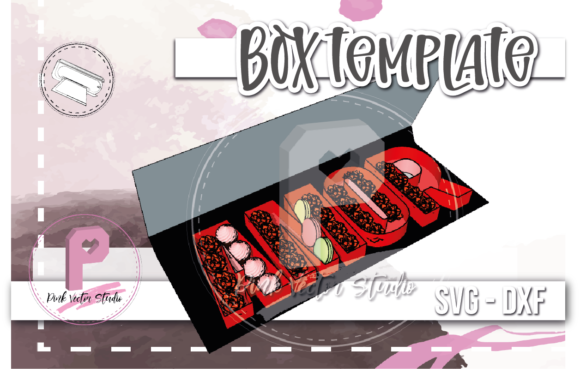
The assembly phase transforms flat components into a cohesive 3D object. This is where the "shadow box" concept comes to life. The design typically involves stacking the letterforms over a background, separated by spacer layers that create depth. This depth allows light to cast shadows, enhancing the visual impact of the word "AMOR." For consistent results, the application of adhesive must be precise. Using too much glue can cause seepage that ruins the finish, while too little can compromise structural integrity. Many professionals recommend using PVA glue for wood-based materials or solvent cements for acrylics, applied sparingly with a fine-tip applicator.
Post-processing is equally important for delivering a polished final product. After assembly, surfaces may require sanding to remove minor imperfections or burn marks left by the laser. Painting or staining the layers before assembly can sometimes yield cleaner results than attempting to finish the object after it is constructed, especially in the recessed areas created by the shadow effect. For those offering custom services, this stage provides an opportunity to add value through hand-painted details, gold leafing, or protective varnishing. These finishing touches elevate the perceived value of the 3D Letters Shadow Box AMOR, making it suitable for high-end gifting or interior design installations.
Scaling and Customization Strategies
One of the advantages of working with vector-based assets like the 3D Letters Shadow Box AMOR is the ability to scale without losing resolution. Whether the goal is to create a miniature keepsake or a large-scale wall installation, the underlying geometry remains sharp. However, scaling introduces new variables. Enlarging the design increases the span of the letters, which may require additional internal supports to prevent sagging, particularly if using thinner materials. Conversely, reducing the size demands higher precision in cutting and assembly, as the tolerance for error diminishes.
Customization extends beyond size. Creators often modify the original files to incorporate additional elements, such as floral motifs, dates, or monograms surrounding the central "AMOR" text. Because the files are provided in editable vector formats, integrating these changes is straightforward for users familiar with bezier curve manipulation. This flexibility allows the design to serve as a template for a wider range of products, from wedding centerpieces to anniversary gifts. By treating the downloaded files as a base rather than a rigid final product, businesses can diversify their offerings without starting from zero.
Long-Term Utility and Workflow Integration
Incorporating the 3D Letters Shadow Box AMOR into a recurring workflow offers long-term benefits for productivity-minded users. Once the optimal settings for cutting, assembly, and finishing are established, the process becomes repeatable and scalable. This repeatability is crucial for fulfilling bulk orders or maintaining a consistent inventory for online marketplaces. Documenting these parameters—such as laser power settings, feed rates, and drying times for adhesives—creates a standard operating procedure (SOP) that ensures every unit meets the same quality standards.
Furthermore, digital assets of this nature facilitate collaboration. In a team environment, one member can handle the digital preparation and nesting, while another manages the machine operation, and a third focuses on assembly and finishing. The clear separation of tasks is made possible by the standardized nature of the DXF and SVG files. This division of labor enhances overall throughput and allows each team member to specialize in their area of expertise.
Ultimately, the value of the 3D Letters Shadow Box AMOR lies in its ability to bridge the gap between digital design and physical creation. It provides a reliable, high-quality foundation upon which creators can build diverse and meaningful projects. By approaching these files with a mindset focused on preparation, compatibility, and systematic execution, users can seamlessly integrate them into their professional routines. Whether used for a single personal project or as part of a larger commercial operation, this asset demonstrates how well-structured digital resources can streamline the creative process and lead to superior tangible results.