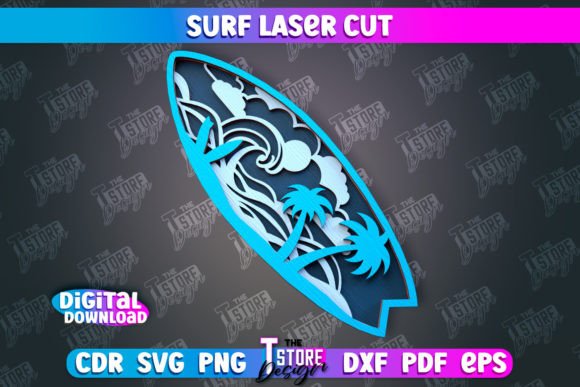
Strategic Fabrication: Leveraging 3D Surf Laser Cut Wooden Surfboards for Business and Creative Growth
In the evolving landscape of physical product creation, the intersection of digital precision and tangible craftsmanship offers a distinct competitive advantage. The concept of 3D Surf Laser Cut Wooden Surfboards represents more than just a decorative item; it is a strategic asset for entrepreneurs, educators, and creators looking to optimize their operational workflows while delivering high-value aesthetic experiences. When approached with intentionality, these layered wooden designs serve as a powerful medium for branding, educational demonstration, and rapid prototyping.
The core utility of this technology lies in its ability to translate complex three-dimensional concepts into manageable two-dimensional data sets that laser cutting machines can execute with extreme accuracy. By utilizing files specifically designed for this purpose—such as the comprehensive archives containing SVG, EPS, PNG, PDF, and DXF formats—professionals can bypass the steep learning curve of manual design and focus immediately on production quality and market positioning. This shift allows businesses to allocate resources toward scaling operations rather than getting bogged down in the initial drafting phases.
Optimizing Production Workflows Through Digital Precision
For small business owners and hobbyists alike, time is the most scarce resource. The adoption of pre-engineered Surf Laser Cut Wooden Surfboards 3D Surf Design Summer Design CNC File packages streamlines the manufacturing process significantly. Instead of spending hours calculating layer thicknesses, kerf adjustments, and structural integrity, you begin with a verified blueprint. This ensures that every cut serves a purpose and every engrave adds value.
Understanding the file architecture is critical for operational success. A standard high-quality package typically includes a ZIP archive containing multiple vector and raster formats. The inclusion of SVG and DXF files ensures compatibility with a wide range of industry-standard software like LightBurn, Illustrator, or CorelDraw. Meanwhile, EPS and PDF files provide redundancy for different workflow preferences. Having access to a PNG file allows for quick visual previews and marketing mockups before any material is committed to the cutter.
Strategic implementation requires strict adherence to the design specifications provided within these files. In professional laser cutting, color coding is not merely aesthetic; it is functional instruction. Typically, red lines indicate cut paths, telling the machine where to sever the material completely. Conversely, black lines denote engrave paths, directing the laser to mark the surface without cutting through. Ignoring these distinctions or failing to verify them within your specific software environment can lead to material waste and machine downtime. Always perform a simulation run to ensure your machine interprets the color codes correctly before initiating a full production batch.
Enhancing Brand Positioning and Customer Experience
Beyond the mechanics of production, the end product plays a pivotal role in how a brand is perceived. A well-crafted wooden surfboard model, assembled from precise laser-cut layers, communicates quality, attention to detail, and a connection to nature. For retailers in coastal regions, surf shops, or lifestyle brands, offering these items as premium merchandise can elevate the entire customer experience.
Consider the psychological impact of tactile products in a digital-first world. Customers increasingly value authenticity. A 3D Surf Laser Cut Wooden Surfboard offers a tangible connection to the ocean culture that plastic replicas cannot match. When used as part of a broader marketing strategy, these items can serve as high-end corporate gifts, loyalty rewards, or limited-edition collectibles. The perceived value of a hand-assembled wooden object often exceeds its production cost, providing healthy margins for thoughtful entrepreneurs.
Furthermore, the versatility of the design allows for customization. While the base geometry remains consistent, the choice of wood veneer—whether walnut, maple, bamboo, or plywood—allows for distinct branding opportunities. You might use lighter woods for a summer-themed collection and darker, richer tones for a winter or luxury line. This flexibility enables businesses to adapt quickly to seasonal trends without redesigning the core product.
Educational Applications and Skill Development
Educators and workshop facilitators will find significant value in integrating these designs into their curricula. The process of assembling a 3D object from 2D slices is an excellent practical lesson in spatial reasoning, engineering principles, and design thinking. For STEM programs or maker spaces, Surf Laser Cut Wooden Surfboards provide a ready-made project that teaches students about file management, machine operation, and material properties.
Using these files in an educational setting also introduces learners to the importance of file compatibility. As noted in the product specifications, ensuring that your cutting machine and software are compatible is a prerequisite for success. This creates a natural teaching moment regarding technical requirements and troubleshooting. Students learn that having the right tool is only half the battle; knowing how to configure that tool to interpret digital instructions correctly is equally vital.
Moreover, the assembly process fosters patience and fine motor skills. Unlike snap-together plastic kits, wooden layers often require careful alignment and adhesive application. This hands-on engagement deepens the learner's appreciation for the manufacturing process and the effort behind physical goods.
Risk Management and Strategic Considerations
While the benefits are substantial, relying on digital fabrication without a clear strategy carries risks. The primary danger lies in treating the download as a commodity rather than a component of a larger plan. Purchasing a CNC file without understanding your machine's capabilities or your target market's preferences can result in inventory stagnation.
One common pitfall is neglecting material testing. Different woods react differently to laser heat. What works perfectly on birch plywood may scorch excessively on oak or fail to cut through denser hardwoods. Before committing to a large run, it is imperative to test the red cut lines and black engrave lines on scrap material from your intended batch. This step validates power settings, speed, and frequency, ensuring the final output matches the design intent.
Another risk involves intellectual property and differentiation. Since these files are available digitally, others may have access to the same designs. To maintain a competitive edge, your value proposition must extend beyond the file itself. Focus on superior finishing techniques, unique material combinations, or exceptional packaging. Your brand identity should be the differentiator, not just the shape of the surfboard.
Decision-Making Framework for Implementation
To maximize the return on investment for 3D Surf Laser Cut Wooden Surfboards, adopt a structured approach to deployment:
- Audit Your Capabilities: Verify that your laser cutter supports the file formats provided (SVG, DXF, etc.) and that your workspace can handle the dust and ventilation requirements of cutting wood.
- Define Your Objective: Are you producing these for direct sale, as promotional items, or for educational purposes? Your goal dictates the scale of production and the choice of materials.
- Validate the Files: Open the files in your preferred software immediately after purchase. Check for closed vectors, correct line colors (Red for Cut, Black for Engrave), and scale accuracy. If the file appears incorrect, contact the provider promptly rather than attempting to fix complex vector errors yourself.
- Prototype Iteratively: Produce a single unit first. Evaluate the fit of the layers, the depth of the engraving, and the overall aesthetic. Make necessary adjustments to your machine settings before scaling up.
- Plan for Scalability: If the prototype succeeds, calculate the material yield per sheet of wood to minimize waste. Organize your cutting queue to maximize machine uptime.
Long-Term Value and Community Engagement
The journey of using digital fabrication tools is ongoing. Engaging with the creator community can provide long-term benefits. Many designers offer updates, new variations, or custom modifications if requested. Maintaining a line of communication with the file provider ensures you stay informed about potential improvements or new releases that could complement your existing product line.
Following creators and staying updated on future releases allows you to anticipate trends and keep your offerings fresh. In a fast-moving market, the ability to pivot quickly to new designs—such as seasonal variations or new geometric styles—is a significant advantage. By building a relationship with suppliers and staying active in relevant forums or social feeds, you position yourself as an informed practitioner rather than a passive consumer.
Ultimately, the strategic use of 3D Surf Laser Cut Wooden Surfboards is about balancing efficiency with creativity. It empowers you to produce high-quality, physically engaging products with minimal friction. By respecting the technical constraints, understanding the material behaviors, and aligning production with clear business goals, you transform a simple digital file into a robust engine for growth and innovation. Whether you are a seasoned manufacturer or a newcomer to the laser cutting world, the disciplined application of these resources can yield impressive, lasting results.